
Separate Waynesboro Tax Values and Bills
Waynesboro property tax records tie three things together. These are an assessed value, a tax account, and the City's payment and relief process. The Assessor and Commissioner of the Revenue handle valuation and relief. The Treasurer collects the real-estate tax. Those roles answer different questions. An assessor's value is never a tax balance. Start with the parcel, using its address or Map Number. Then confirm the account and payment status with the Treasurer. Waynesboro is an independent city. A parcel just over the line in Augusta County follows a separate tax system and its own property records.
| Field | What It Shows | Where |
|---|---|---|
| Assessed value | City valuation at 100% of fair market value | Real Estate Assessor |
| Assessment date and sales window | Value date and sales considered for the cycle | 2025 reassessment archive |
| Relief application | Annual owner, property, income, and net-worth affidavit | Commissioner of the Revenue |
| Tax account and payment | Account, payment options, and amount entered for payment | City Treasurer |
| Payment arrangement | Account plan; penalties and interest may still accrue | Treasurer office |
"Market value" is the assessor's standard. It is not a promised sale price or an appraisal for one buyer. The actual tax bill also turns on the city rate and the account status. The assessment page publishes no public form with every parcel field. The Treasurer's page confirms no open public balance-search feature either.
Waynesboro’s 2025 Assessment Uses a Set Sales Window
The city’s 2025 general reassessment values property as of January 1, 2025 and uses sales from August 1, 2023 through December 31, 2024. Notices were mailed January 31, 2025. The April 2025 public-hearing materials reported a 13.5% citywide increase in assessed value excluding new construction. That aggregate figure is context for the cycle; it does not predict the change for a particular parcel.
The city also reported a $0.69 per $100 equalized rate and a proposed $0.89 rate in its hearing material. A proposed rate is not a final parcel bill. Check the current adopted rate and the parcel account with the Treasurer. The city’s reassessment archive links the 2025 real-estate land book and sales-by-street files, which let an owner inspect the evidence around a location.
Open the official 2025 reassessment archive. This image points to the land-book and sales-by-street collection.
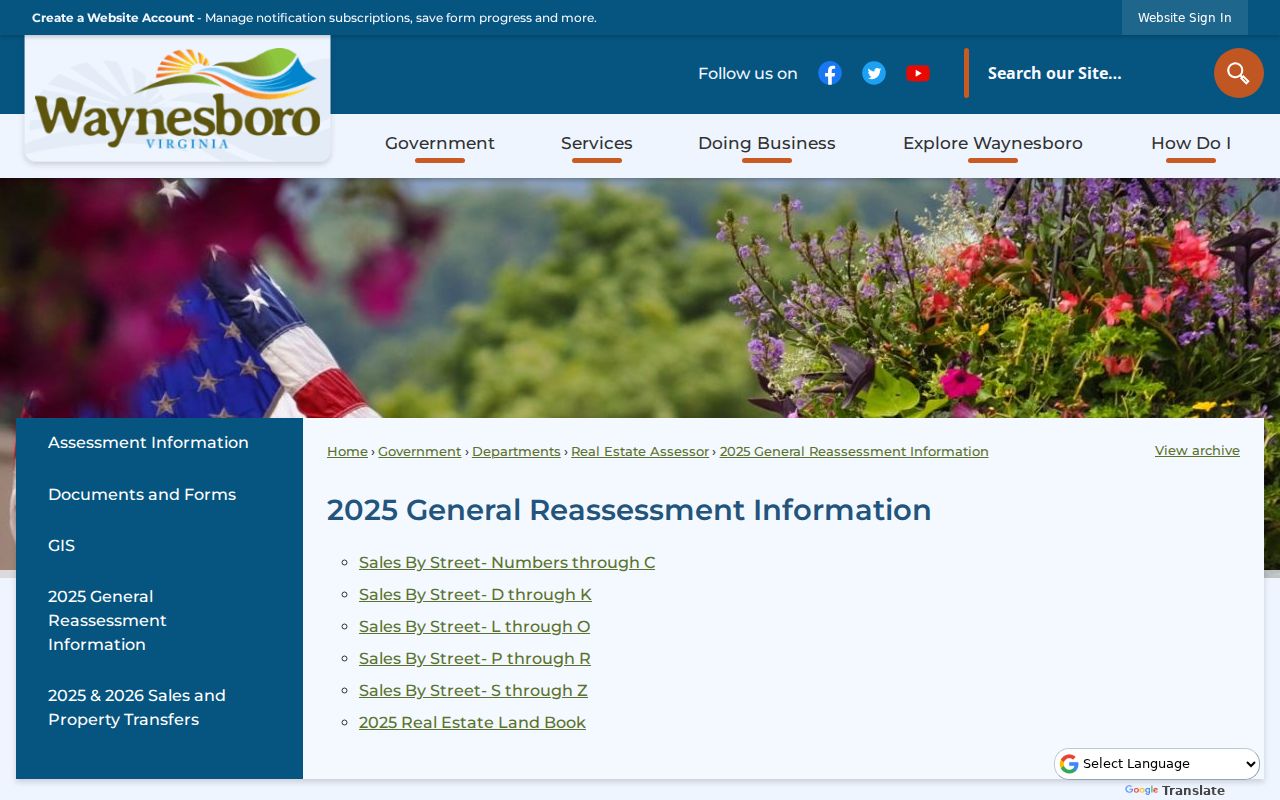
Match the file's valuation date and sales window against the year printed on the individual assessment notice.
Find a Waynesboro Tax Account by Its Keys
The Treasurer's pre-payment form takes a real-estate Map Number and Tax Bill Number. Those are the account keys. The city publishes no public bill-search URL. Without the bill number, identify the parcel through the city GIS or property sheet. Then ask the Treasurer which number the office needs. Don't guess at a parcel-number pattern. Waynesboro's exact format is not published.
The payment portal inventory lists account number, a property-tax option, and amount as fields. A payment form is not proof that a public search returns every bill. The Treasurer sits at the City government offices. The office can confirm the account, balance, and payment route. Check the current convenience fee on the live payment screen. City payment pages have changed vendors and fee language.
- Use the Map Number or Tax Bill Number from the current notice or assessor record.
- Confirm the account and balance with the Treasurer before choosing a payment method.
- Check relief status with the Commissioner, who administers the annual application.
- Ask the Treasurer whether a payment arrangement, penalty, or delinquency issue remains open.
- Assessed value
- The city’s property valuation for the assessment roll, set at full fair market value by law.
- Tax account
- The Treasurer’s billing and payment record, separate from the deed.
- Tax relief
- An annual application administered by the Commissioner; the current form controls.
- Tax lien
- A recorded or legal claim for unpaid tax; ask the Treasurer and inspect land records.
Waynesboro Transfer Reports Supplement the Land Book
The assessor publishes a separate 2025–2026 Sales and Property Transfers page with monthly report links. The 2025 reassessment archive adds sales-by-street files and the real-estate land book. Together these property records let you weigh a local sale against the city's assessment evidence. They carry no promise that the assessor's roll updated the same day the deed recorded. The city publishes no fixed ownership-update lag.
Treat a sale report as a lead. If the transfer date or legal description matters, check the recorded instrument in Virginia SRA. A transfer list is not a title chain, a tax statement, or an appraisal. The city page works well as a release channel. Its monthly links can be checked by date, so you avoid hunting the whole site for a new file.
See the monthly sales and transfer reports. The page displays the recurring report index.
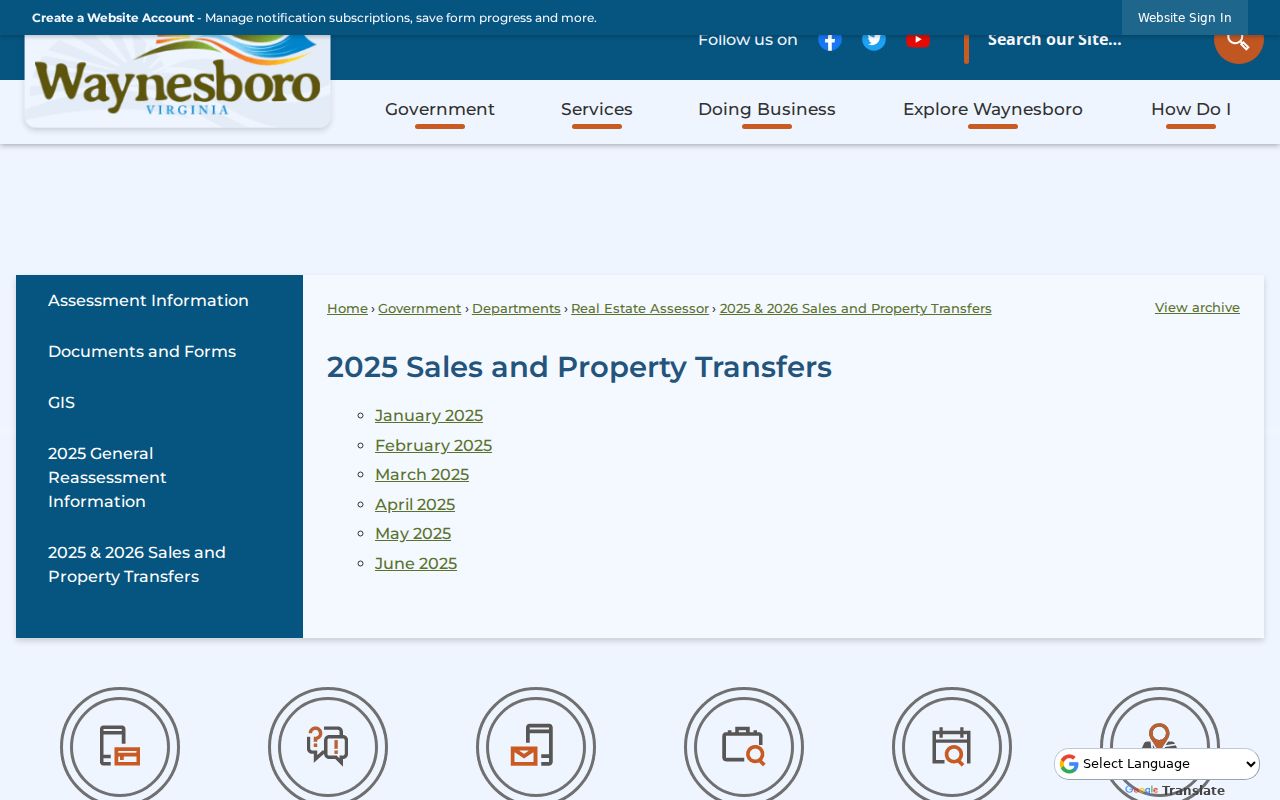
Note the report month and compare it with the date on the recorded deed and the current tax notice.
Waynesboro Tax Relief Is Filed Each Year
The Commissioner of the Revenue runs the city's real-estate tax relief program. The official page sets an annual May 1 filing deadline. The indexed 2026 application asks for the applicant's name and mailing address, the property street address, Loc ID, account number, tax year, income and net-worth facts, ownership and dwelling details, and any required supporting documents. Financial information stays confidential under the form's terms.
The form describes relief for a person age 65 or permanently and totally disabled, with income under $40,000 and net worth under $80,000, excluding the dwelling and up to one acre. Those thresholds come from the 2026 form. A future form may differ. Confirm eligibility and the current version with the Commissioner. The program sits apart from assessed value, the deed chain, and the Treasurer's payment arrangement.
The city's real-estate tax page carries the May 1 filing instruction and shows the published relief route.
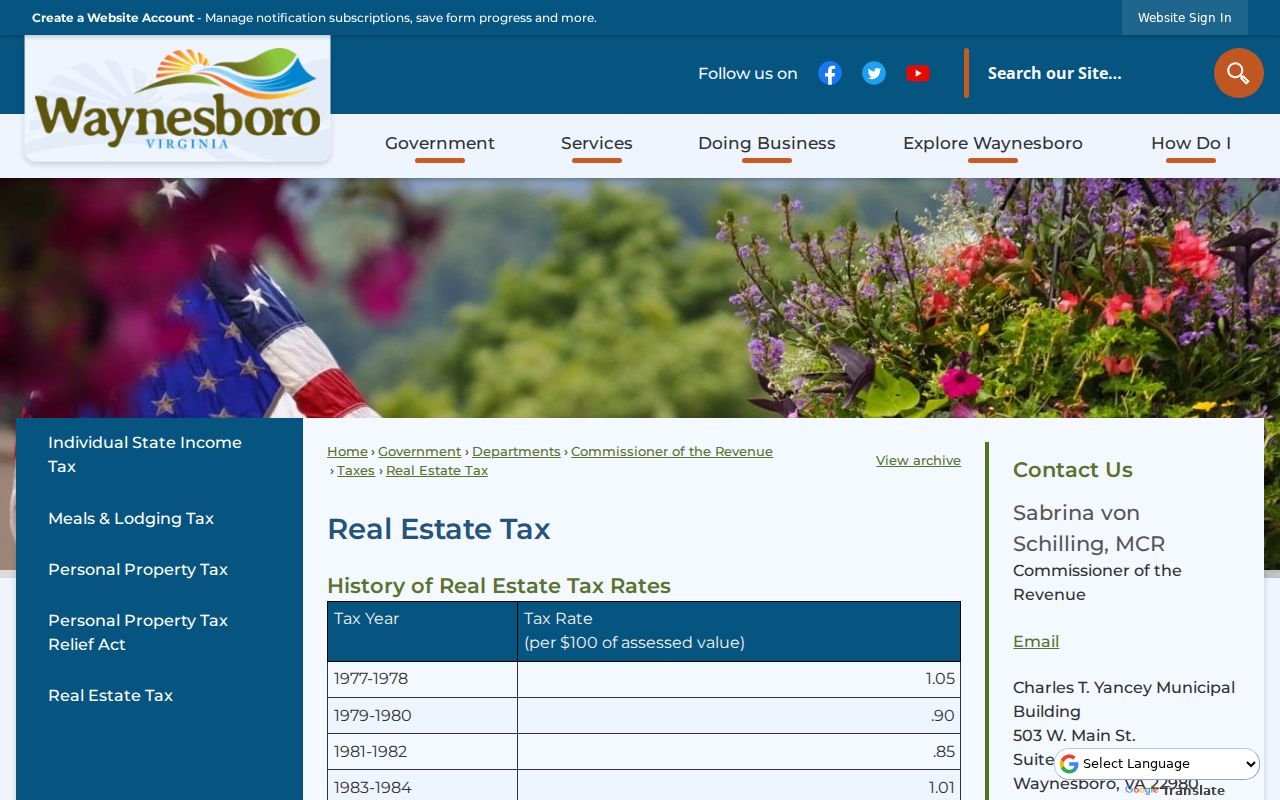
Use the current form and confirm income, net-worth, and documentation rules with the Commissioner.
Waynesboro Treasurer Lists Payment Channels
The Treasurer's office collects real-estate taxes for Waynesboro. It offers online, phone, and in-person payment options. The city payment page names a Paymentus route and a phone line. Older archived pages point to BridgePay or Tyler instead. Vendors change. Confirm the current provider, convenience fee, and account fields on the live payment page before paying. The payment page has listed a 2.75 percent convenience fee. The city cautions that payment terms can shift. Treat that figure as a current listing, not a permanent schedule.
| Channel | What the City Lists | Check Before Use |
|---|---|---|
| Online | Payment portal with account number, tax-payment choice, and amount | Current vendor, convenience fee, and balance |
| Phone | 877-318-5780 payment line in the indexed page | Current fee and account details |
| In person | Treasurer’s Office route | Office contact, hours, and accepted form of payment |
| Bank bill-pay check | May be mailed by the payer’s bank | Allow an average 7–10 business days for delivery |
The official Waynesboro payment page carries the live options and vendor details. That page is a payment route, though, not a public bill search.
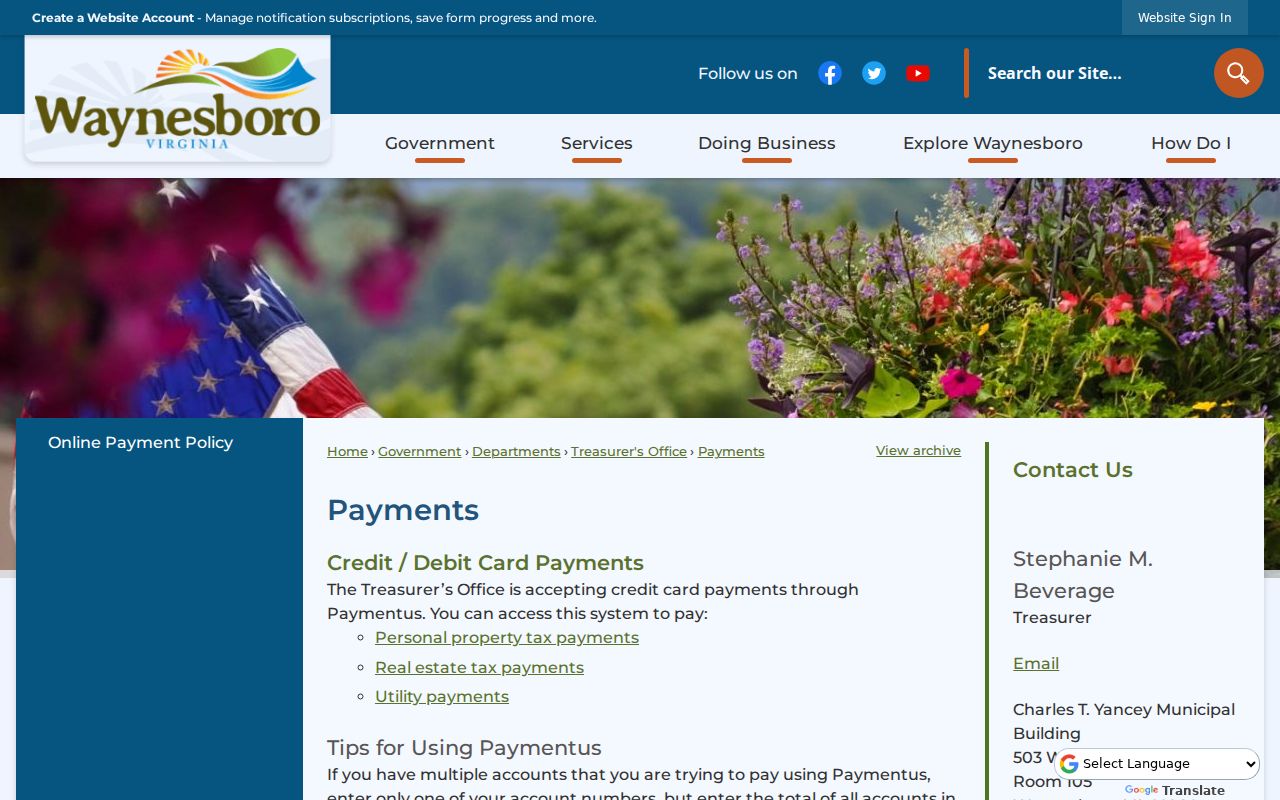
The Treasurer's page warns that arrangements never erase penalties or interest.
Waynesboro Delinquency Needs Treasurer Confirmation
Waynesboro publishes no public delinquent-parcel list, no online tax-bill search, and no tax-sale portal. The Treasurer’s office, at 540-942-6606, can state whether an account is current or delinquent. It can also say whether the account is under a payment arrangement. It can confirm a filed lien or a tie to a sale process. Payment plans exist in some cases. The City warns that penalties and interest keep running.
A displayed amount, a mailed tax bill, and a recorded lien are three different things. Where title or sale status matters, set the Treasurer’s answer beside the Circuit Clerk’s deed records. Weigh any court filing with them too. A notice can be withdrawn. A payment can halt a process. An online index can lag. Request a date-stamped response, and keep the balance separate from any lien or completed conveyance.
The Treasurer’s official page covers collection, delinquency, and payment arrangements for account questions.
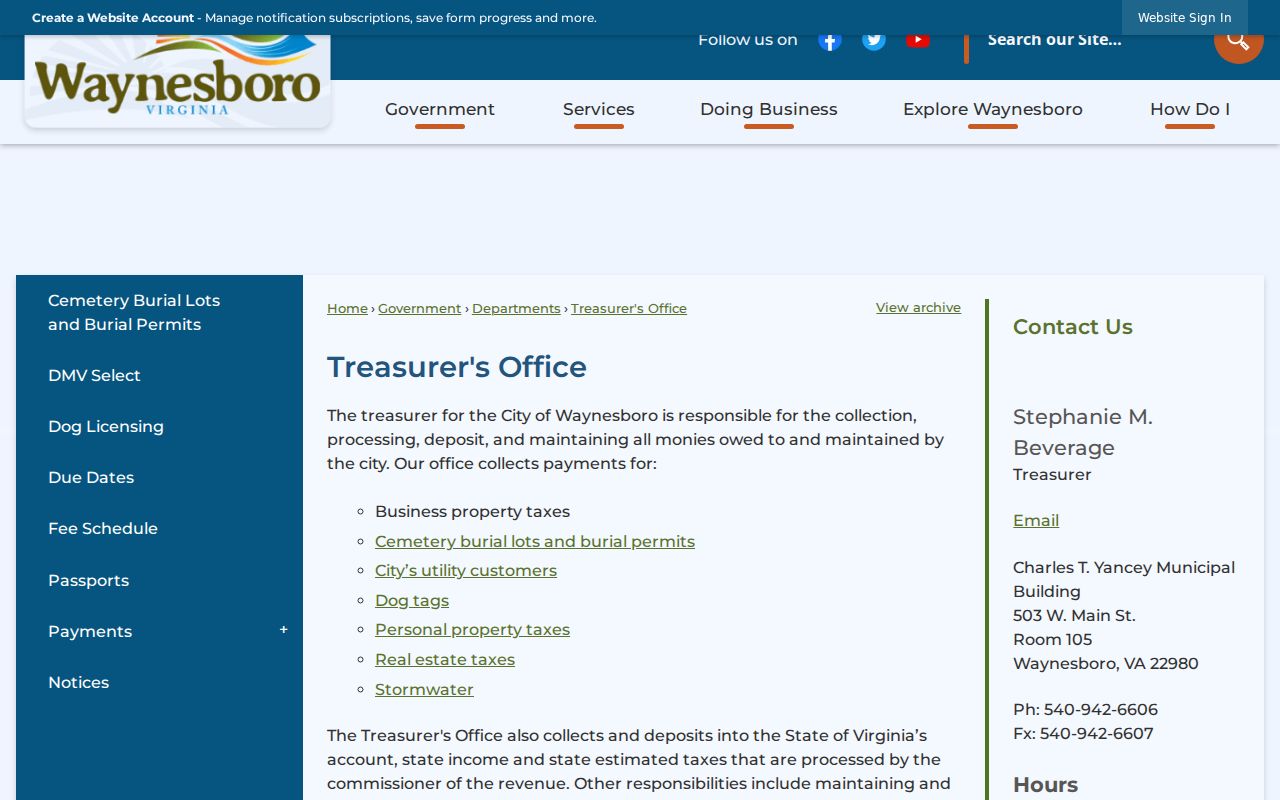
Ask the Treasurer directly about balance and account status.
Challenge a Waynesboro Assessment in Stages
Waynesboro assessments move through a staged appeal path. The City Assessor begins with an administrative review. An unhappy owner can then take the dispute to the Board of Equalization. Circuit Court is the final stage. For live forms, filing dates, hearing schedules, and evidence rules, check the current assessor notice or contact the Assessor. Each stage carries its own calendar. Never carry an old year's deadline forward. A value review stands on evidence. Gather the assessment notice and the parcel description first. Then add relevant sale records, photographs or building facts the Assessor accepts, and dated land-book entries. The city's 2025 reassessment relied on a defined sales period, so compare sales from that window rather than a later market headline. Keep the assessor's answer with the tax account, because a value dispute and a payment question belong to different offices.
Appeal timing. Deadlines depend on the current notice and review stage. Contact the Waynesboro Assessor promptly for the applicable filing date and Board of Equalization instructions; the available research does not state one universal appeal cutoff.
Keep the whole paper trail together. The assessment notice, parcel sheet, comparable sales, and any correction correspondence belong in one file. Name the disputed characteristic or valuation point clearly. Ask whether a filing form or appointment is needed. A payment arrangement with the Treasurer is not an appeal filing, and it does not erase penalties or interest. The assessed value and the amount due connect through the tax rate, but different custodians hold each record with its own review route.