
Build a Waynesboro Deed Chain Backward
Start with the newest recorded Waynesboro deed and note its grantee. Work one transfer at a time. The Waynesboro assessor's ownership history and deed-book references can point to a specific instrument, while Virginia SRA serves as the remote land-index route for parcels. No local online start year is published. That means there is no verified digital cutoff to label for the deed index, and older material may still sit in deed books, plat books, or courthouse microfilm. Ask the Clerk about earlier books when the trail stalls.
| Source | Years It Covers | Where Held | What It Shows |
|---|---|---|---|
| Virginia SRA index | Current service; Waynesboro start year unpublished | Circuit Court Clerk / SRA | Party-index clues to recorded instruments |
| Older deed and plat books | Historic runs; exact local years not located | Waynesboro courthouse | Earlier transfers, lots, easements, and descriptions |
| Library of Virginia microfilm | Waynesboro is listed; exact reels need catalog review | Library of Virginia | Supplemental local books and records |
| Directories and newspapers | Library collection; years not listed | Waynesboro Public Library | Address and household context, not title proof |
Build the modern chain online first. When the trail stops, ask the Clerk about the older index. Ask also about the book sequence behind it. Library and LVA materials can help identify a locality, address, or household for the period. Return to the deed or probate instrument, though. Treat a prior name as the owner of record only then.
Follow Each Waynesboro Grantor Back
Each deed should serve as the bridge to the next. Search the latest grantee first. Copy the grantor and the legal description. Then search that grantor as a prior grantee, but only after the parcel description matches. A street address may have changed over the decades. A deed's "being the same property conveyed by" clause can point you to the older book, page, or instrument worth inspecting next.
- Locate the latest deed and record its grantee, grantor, date, and description.
- Search the grantor as a grantee to find the earlier acquisition instrument.
- Compare every legal description, including tract, subdivision, lot, and exception language.
- Follow referenced book/page or instrument numbers until the digital index ends.
- Ask the clerk or LVA for the right earlier volume or reel; do not guess a cutoff year.
- Grantor
- The party who transferred an interest in a deed.
- Grantee
- The party who received that interest.
- Chain of title
- The ordered sequence of recorded transfers for the parcel.
- Legal description
- The deed or plat wording that identifies the land beyond a street address.
Waynesboro Names Alter Older Deed Searches
Waynesboro went by several names as the settlement grew into a city. Waynesborough appears in records by 1797. The locality became a town in 1801 and gained incorporation in 1834. Basic City developed at the rail junction in 1881. The two merged in 1923. The Waynesboro name returned in 1924, independent-city status followed in 1948, and annexations came in 1948 and 1986. A prior owner's deed may therefore name Basic City, Waynesboro-Basic, Waynesborough, or Augusta County rather than today's city.
Log each original locality in your search notes. Link it through a legal description, deed, or plat. Rail lines, mills, roads, waterways, and subdivision names can help place an older tract, but they prove nothing about ownership. For proof, return to the deed. Where a Waynesboro title path crosses the 1923 consolidation, search both the person and the former place name in the deed records.
Waynesboro Library Finds Address Clues
The Waynesboro Public Library holds a deep local-history room for address clues. Its Genealogy Room contains city directories, obituary books, county records, school yearbooks, cemetery records, family papers, business histories, local newspapers on microfilm, and other archival files. No exact year run appears for the directories. Some items need the archivist on duty. Call ahead. Record the title, publication year, locality, and street-guide format for each volume you examine.
A directory can tie a surname to an older Waynesboro street or household. It cannot prove ownership of the parcel. Pair the address clue with the deed index, a probate record, or a recorded plat before claiming an owner of record. In-house, the library offers Ancestry Library Edition, with HeritageQuest and Fold3 also listed. Thirty-four volumes of The Skyline yearbook went to Internet Archive. Treat these as context only.
The Library local-history page describes the collection and access.
Ask which reel covers the locality first. The Library's online resources list describes in-house Ancestry Library access plus remote HeritageQuest and Fold3 options, so check it before guessing at a year range.
Genealogy tools suggest names and dates for further research. Confirm every transfer in a land instrument or probate record before accepting it.
Probate Can Change the Former Owner Chain
A death transfer can leave no ordinary sale deed. It may leave none between the prior owner and the current one. Search the decedent in the land index. Then search the probate file. Look for a will. Look for an executor or administrator qualification, an order authorizing sale, a commissioner's report, and a fiduciary deed. Search the fiduciary and estate names too. The deed or court order supplies the transfer authority. An obituary or certificate date alone never shows who received the land.
Virginia birth records generally open after 100 years. Death, marriage, divorce, and annulment records open after 25 years, subject to statutory restrictions. A restricted certified copy demands eligibility and ID. Public indexes, court files, and land instruments often supply the property trail. They do it without any restricted certificate. A will records intent. The later deed or court action shows what was actually recorded for the parcel.
The Virginia vital-record statute sets those opening periods and restrictions.
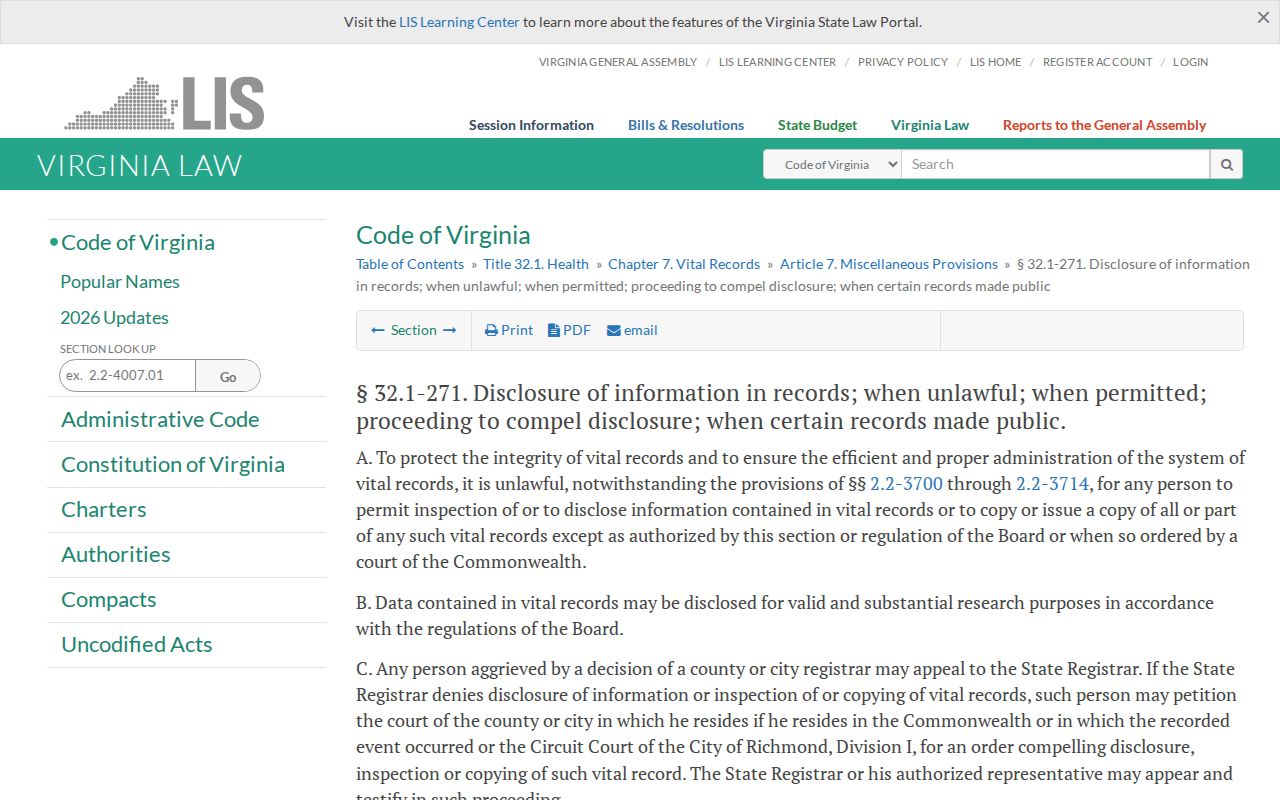
Use the statute for access context. Then trace the transfer through Waynesboro probate and recorded deed records before naming the former owner of record.
Waynesboro Corrected Deeds Need Context
A single Waynesboro parcel can carry far more than a deed. Corrective deeds, releases, deeds of trust, life-estate transfers, easements, assignments, and certificates of satisfaction all leave traces in the property records. Read each instrument beside the one it cites. A release may be indexed under a lender or trustee rather than the owner of record. A corrected deed can clear up a flawed legal description, yet the earlier instrument still remains in the chain of title. Keep every date and party role intact.
For former-owner research, each role matters. Separate the fee owner from a life tenant, remainderman, trustee, lender, personal representative, or prior grantor. The assessor's history helps, but the recorded instrument from the Circuit Clerk supplies the legal party and the controlling language. The Waynesboro deed records page covers instrument types and copy access. This page follows those records backward for one parcel.
When Waynesboro’s Online Chain Stops
The Circuit Court Clerk holds Waynesboro's land records. The office at 250 South Wayne Avenue, Suite 202, lists 540-942-6616 and weekday hours of 8:30 a.m. to 5 p.m. Ask which deed books, indexes, plat books, or older volumes cover the missing year. The public SRA page gives no local start date or image cutover, and the office publishes no microfilm reel list. The courthouse and the archive catalog come next. Never guess the year.
Historic material also sits at the Waynesboro Library and the Historical Museum, both named on the City Public Disclosure page. Council minutes run through Laserfiche back to 1929. Ordinances and resolutions are online from 2005, with council packets from 2008. Those sources can explain a street, subdivision, zoning change, or improvement. They still cannot replace a deed or plat.
For non-portal records, follow the city public-disclosure instructions.
Send names, locality variant, date range, and legal description.
How Far Back Waynesboro Deed Records Reach
The online SRA index does not state its first year. The statewide SRA description explains access levels. It names no local imaging or index cutover. No official account reports a catastrophic courthouse loss in Waynesboro. Treat an empty property search as an access or name issue. Wait for the clerk to confirm whether older books, indexes, or a different locality term apply.
Lawful use. Use earlier owner records for house history, title research, inheritance questions, and property diligence. Do not use a name or address to track, harass, threaten, or harm a living person.
An index result points to a book and page. Compare the instrument's legal description with the present parcel before adding a name to the chain of title. Lot names, street addresses, and local boundaries change over time. Basic City is one example from local history. The settlement now called Waynesboro is another. An uninterrupted chain requires more. Check releases, corrective instruments, probate transfers, and later deeds in the Waynesboro deed records.