
Which Waynesboro Land Papers Matter
The Circuit Court Clerk records far more than simple transfers. Virginia land-record books commonly hold original and corrected deeds, deeds of trust, releases, easements, rights-of-way, plats, deeds of gift, leases, assignments, certificates of satisfaction, and judgments. Each type does different work. A deed records a transfer or interest. A deed of trust usually secures a loan. A release or certificate of satisfaction marks a later event clearing it. Easements and rights-of-way describe a use of the land. They do not change the fee owner.
| Deed Type | What It Does | Common Use |
|---|---|---|
| Deed or deed of gift | Records a conveyance or gift of an interest | Confirm the parties and legal description |
| Corrected or amended deed | Changes or corrects an earlier instrument | Read with the document it updates |
| Deed of trust | Records a secured real-estate obligation | Search later releases and assignments |
| Release or satisfaction | Records a later release or satisfaction event | Match it to the original instrument |
| Plat, easement, or right-of-way | Shows mapped lots or recorded land-use rights | Read the filed instrument, not only GIS |
Treat those categories as common Virginia land instruments. They are not a complete local type list. The official court source publishes no full inventory of Waynesboro's recording options. A lien, judgment, or easement can sit beside deeds in the land records anyway. None of it makes the named creditor the owner of record.
Virginia SRA Is Waynesboro’s Remote Land Index
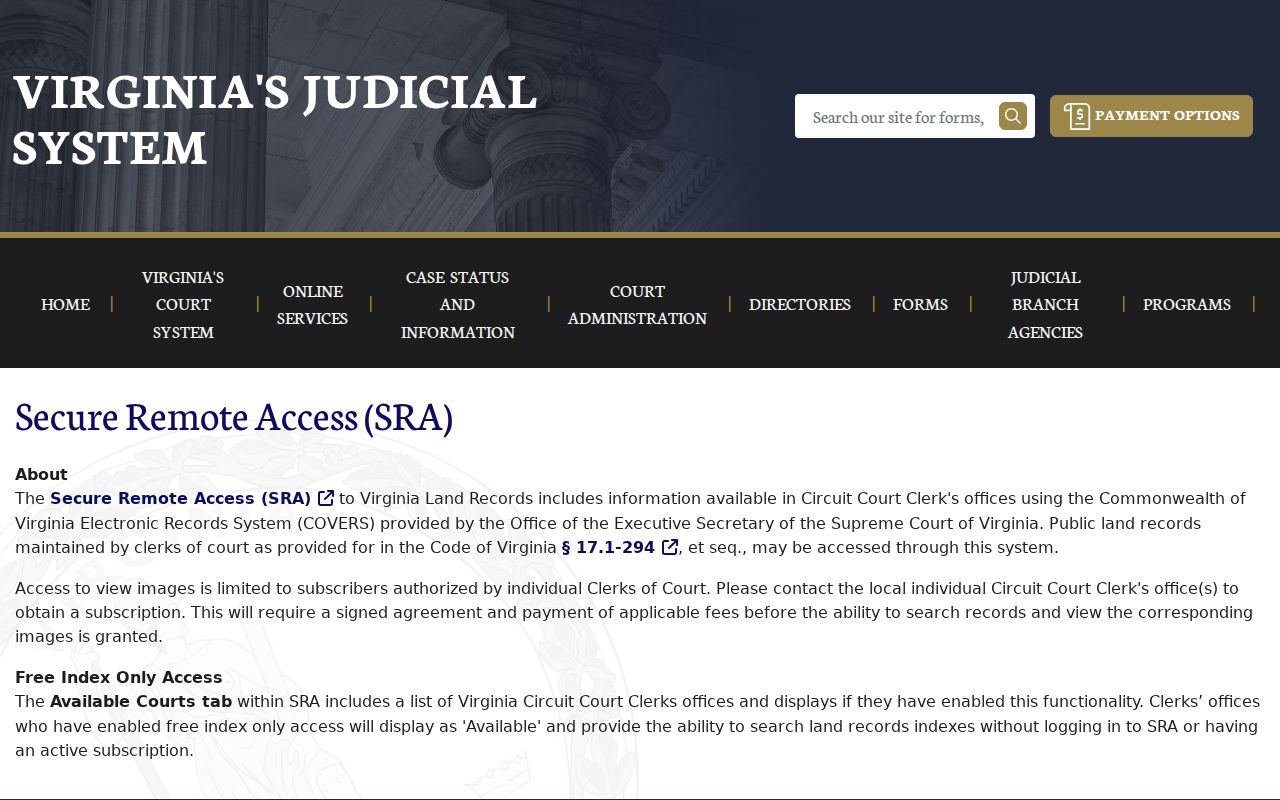
The Supreme Court of Virginia’s Secure Remote Access system, called SRA, is the official remote route into land records. Circuit-court clerks keep those records. Access works in tiers. A local court may enable a free index, while document images stay limited to subscribers the individual clerk authorizes. Images require the clerk’s approval. The official SRA notice does not publish Waynesboro’s exact index start year, image cutover, or complete instrument-type list. Ask the Waynesboro clerk which years and images are available. Do not read a blank result as a gap in the land record.
| Index item | How it helps | Waynesboro status |
|---|---|---|
| Grantor or grantee name | Find a party to a recorded instrument | Party-name index route; exact screen label not published |
| Instrument reference | Identify the record for a clerk request | Use the number shown in the live result |
| Recording date and type | Separate a transfer from a release or plat | Exact local result fields and dropdowns require confirmation |
| Image | Read the signed instrument and legal description | Clerk-authorized subscriber or office access |
The official SRA landing page lays out the index and image access tiers for the whole state. It is the statewide entry point rather than a Waynesboro sample result.
Match any hit to its actual instrument before relying on a party name alone.
Use the Waynesboro Grantor and Grantee Trail
SRA gives remote access to the public land records that circuit-court clerks maintain. Waynesboro is the recording jurisdiction for land inside its independent-city boundary. A free index may appear where the local clerk enables one. Images remain limited to subscribers the clerk authorizes. The SRA landing page does not state Waynesboro’s exact index start year or image cutover. The clerk is the source for a coverage check.
Begin with the latest acquisition. Search the current owner as grantee. Identify the instrument. Read the grantor, then search that grantor as a prior grantee. Along the way, keep every recording date, document reference, and legal description. When a result involves an LLC, trust, or estate, search the exact legal name plus the trustee or personal representative. A same-name hit is never enough on its own. Match the property description and check related instruments. For a longer reverse chain, the Waynesboro former-owner method moves back through earlier deeds.
- Search the latest owner as grantee and record the instrument reference and date.
- Read the grantor and copy the legal description before moving to an earlier record.
- Search that grantor as a grantee to locate the prior acquisition.
- Repeat, checking corrected deeds, releases, estate transfers, and any life-estate language.
- Ask the clerk where older books and indexes are held if the online trail ends.
- Grantor
- The party transferring an interest in the instrument.
- Grantee
- The party receiving the interest named in the instrument.
- Chain of title
- The ordered set of recorded transfers tied to a parcel.
- Book and page
- A volume and page citation used in deed-book references.
Basic City Changes Waynesboro Deed Searches
Older land references follow Waynesboro’s changing names and borders. The settlement was known as Waynesborough by 1797. It became a town in 1801. It incorporated in 1834. Basic City grew at the 1881 rail junction and consolidated with Waynesboro in 1923. The city name returned in 1924. Independent-city status followed in 1948, and annexations occurred in 1948 and 1986. A modern parcel may therefore appear in older sources as Basic City, Waynesboro-Basic, Waynesborough, or Augusta County.
When a street-address search stalls, follow the grantor, grantee, tract, and legal description into those former place names. Railroad corridors, waterways, mills, and older road names can help identify the tract. But they remain clues rather than proof. Keep the instrument’s words intact. Compare the older description against a recorded plat. That check matters most for a title chain crossing the 1923 consolidation or a later annexation.
Older Waynesboro Deed Books Need Clerk Research
The SRA landing page does not state Waynesboro’s online cutoff. Older deeds, deed books, plat books, and index volumes remain a courthouse and archive question. The courthouse is the authoritative place to ask for older local volumes. The Library of Virginia’s locality microfilm list includes Waynesboro. Its page does not spell out reel runs or beginning and ending years. Check the catalog or contact reference staff before planning a reel search.
The local library adds county records, city directories, obituary books, local newspapers on microfilm, cemetery records, and family files. Its holdings page confirms those collection types without a complete directory-year list. A directory can match an old street to a household. It cannot establish title. Record the directory title, year, locality, and street-guide format. Then return to the official deed chain for ownership proof.
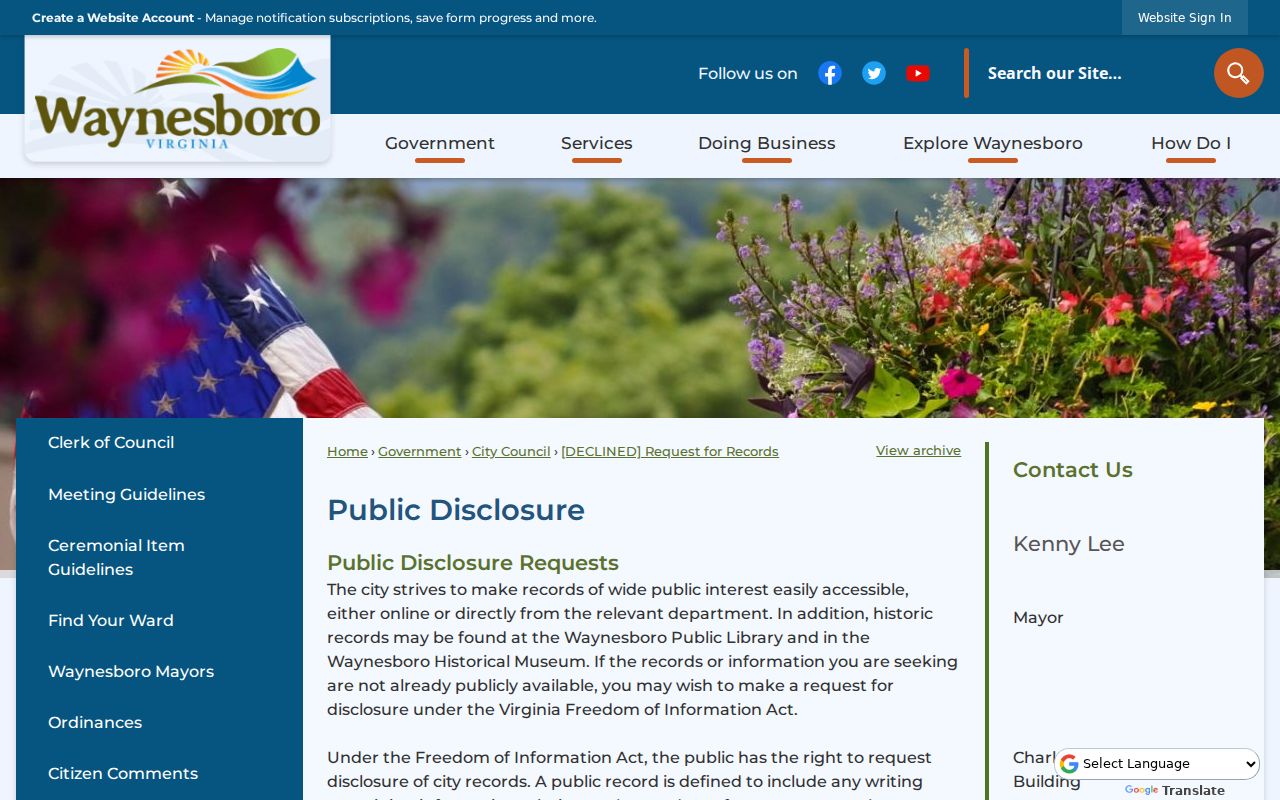
The City Public Disclosure page identifies city record routes and historic repositories. It covers files that no current online index lists.
For older volumes, ask about the locality, year span, index type, and copy rules before searching in person.
Probate Transfers Add Fiduciary Deeds
Death can reshape a deed chain without any sale. No buyer or seller takes part. Search the decedent's name in SRA and in the Circuit Court probate file. There, look for a will, the qualification of an executor or administrator, an order authorizing sale, and a fiduciary deed. Search the fiduciary and the estate name too. The recorded deed or court order supplies the transfer evidence. An obituary offers context, never title disposition.
Virginia keeps vital records private for fixed periods. Birth records open after 100 years. Death, marriage, divorce, and annulment records generally open after 25 years, subject to statutory restrictions. Before then, a certified copy requires eligibility and identification. For property authority, lean on the court file and the deed index rather than assuming you can obtain a restricted certificate.
A life estate, trust, or joint ownership can also split present possession from later ownership, so read the vesting language carefully. Then search for a release or remainder transfer. The assessor's history is a finding aid. The Clerk's documents establish what was recorded.
Waynesboro Deeds Sit Beside Releases and Liens
A Waynesboro deed search should reach past the deed itself. A deed of trust may be followed by an assignment, substitution, certificate of satisfaction, deed of release, or trustee's deed. Judgments, mechanic's liens, lis pendens, easements, and rights-of-way can limit how a parcel is used or conveyed. Search the owner, and search the lender, trustee, or other named party where the index permits. Match every release to its original instrument number. Check the legal description too.
The City Treasurer tracks tax accounts separately. A Treasurer balance is not a recorded land lien. Ask the Treasurer about account status. Ask the Clerk about filed liens or releases. A property dispute that reached court may leave orders or a partition sale report on the Circuit docket alongside land instruments. Virginia's statewide online court information has selective coverage. When no online case appears, ask the clerk about archived files or courthouse access.
Request a Waynesboro Deed Copy
The Waynesboro Circuit Court Clerk sits at 250 South Wayne Avenue, Suite 202. It is Suite 202 in Waynesboro, VA 22980-0910. The court page posts 540-942-6616 and weekday hours of 8:30 a.m. to 5 p.m. SRA image access runs on clerk authorization plus a subscription. An office or mail request should carry the party names. Include the recording date or range, plus the instrument number or book/page when known. Add the parcel's legal description too. Say whether you want inspection, an ordinary copy, or a certified copy. The clerk can then confirm the fee and how the deed will be delivered.
The official SRA landing page posts no current Waynesboro copy fees. A secondary page listed prices, but an official court source does not confirm them. Treat those numbers with caution. Ask the clerk before sending payment. For older deed books, plats, and indexes, the courthouse stands as the authority. The Library of Virginia holds Waynesboro in its locality microfilm collection. Check its catalog or reference service for exact reel and year coverage.
Recorded, not guaranteed. The Waynesboro index points to recorded instruments, but it does not prove clear title or reveal every unrecorded interest. Confirm the instrument with the clerk and use a title professional when a legal conclusion is needed.